https://www.wonarm.com/the-crusades-from-the-holy-land-to-the-baltic-frontier/
The Crusades were one of the grandest and most controversial events in medieval European history. From 1096 to 1291, lasting nearly two centuries, the Christian world of Europe launched a series of military campaigns to reclaim the “Holy Land” of Jerusalem. While history books often emphasize the religious fervor and military victories of the Crusaders, the truth behind these campaigns involves complex political, economic, and social factors, as well as many lesser-known stories.
1. Origins and Background of the Crusades
The immediate trigger for the Crusades was the Byzantine Empire’s request for help from Pope Urban II to resist the Seljuk Turks. In 1095, at the Council of Clermont, the Pope called upon European nobles and knights to journey east and liberate Jerusalem, promising absolution for sins. This call quickly drew a massive response from the general population, including knights, peasants, merchants, and even women, creating one of the largest religious military mobilizations in European history.
However, the Crusades were not solely driven by religious zeal. Political and economic motivations played a major role. Young nobles could gain land and wealth through participation, while merchants saw opportunities to expand trade routes. The Church sought to strengthen its influence over secular power, and European rulers looked to the Crusades for alliances and internal stability.
2. The First Crusade and the Conquest of Jerusalem
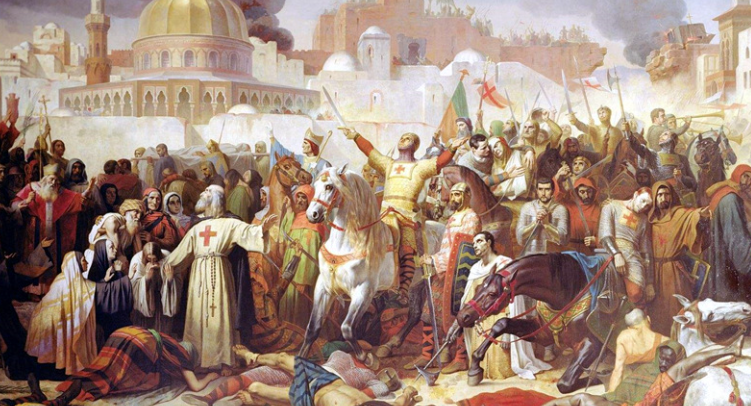
The First Crusade (1096–1099) is the most famous, culminating in the capture of Jerusalem in 1099. At that time, the city was under the Fatimid Caliphate, with strong fortifications and defenses. Crusaders endured long marches, hunger, disease, and fought fierce battles in places like Antioch and Acre.
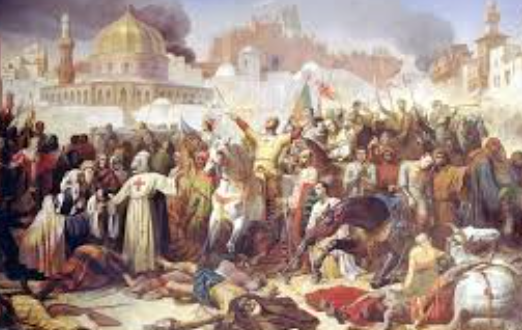
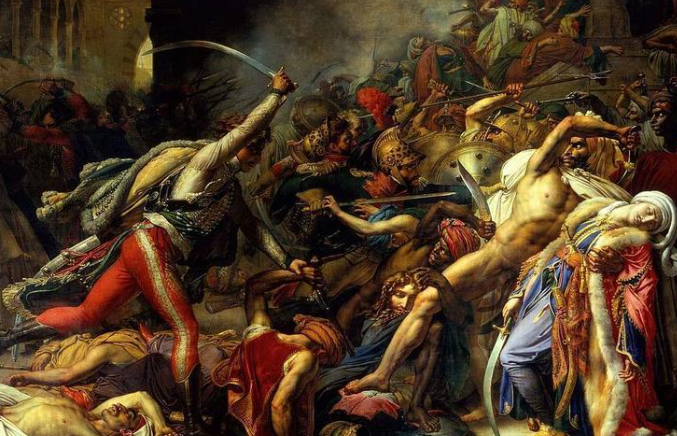
During the siege, the Crusaders were well-organized and highly motivated, but also extremely violent. According to historical accounts, when they captured Jerusalem, a large number of Muslim and Jewish inhabitants were massacred, with blood running through the streets. This event remains highly controversial and has become emblematic of the Crusaders’ brutality.
After the conquest, Jerusalem became the Latin Kingdom, the first feudal state established by the Crusaders in the Holy Land. Crusader nobles divided territories and implemented European-style feudal governance. While the religious objective was achieved, maintaining this system in a multi-ethnic and multi-religious environment proved challenging.
3. Political and Cultural Exchange
The Crusades were not just military campaigns—they also facilitated the exchange of Eastern and Western civilizations. European knights, monks, and merchants encountered advanced Middle Eastern agriculture, architecture, medicine, and philosophy. Trade in spices, silk, and books flourished, bringing great benefits to Italian port cities like Venice and Genoa.
Yet Crusader rule was not long-lasting. Religious and ethnic tensions frequently arose within cities, and the Latin Kingdom depended on reinforcements from Europe. Muslim powers gradually unified in Egypt and Syria, ultimately recapturing most of the Holy Land by the late 12th to early 13th centuries, causing the Crusaders to lose their foothold in the East.
4. Historical Impact of the Crusades
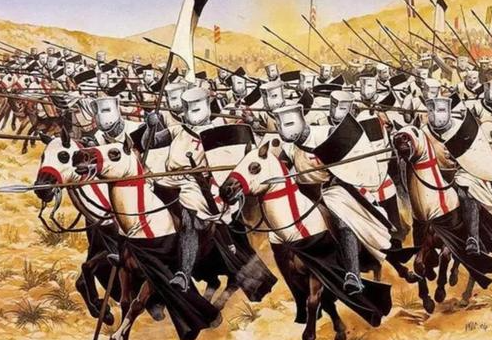
The Crusades left a lasting legacy. Militarily, they advanced European knightly orders, castle construction, and military engineering. Politically, they accelerated the formation of European states and the centralization of power. Economically, they expanded trade networks between East and West. Culturally, they promoted intellectual and philosophical exchange, indirectly paving the way for the Renaissance.
However, the Crusades also had negative consequences, including deepening religious hatred, perpetuating the tradition of religious warfare, and contributing to long-term political instability in the Middle East. The violent conquest of Jerusalem left lasting painful memories among Muslims and Jews.
Conclusion
The conquest of Jerusalem was not just a military victory—it reflected the complex interplay of medieval European society, religion, politics, and economy. The Crusades demonstrated the power of faith but also revealed human extremities and contradictions. History shows that wars are never merely front-line conflicts; they are reflections of societal structures, economic interests, and cultural interactions.
By revisiting the Crusades and the conquest of Jerusalem, we gain insight into the religious and political landscape of medieval Europe, while also considering the relationships between faith, power, and violence. The stories behind these events are often more meaningful than the victories themselves, shaping the histories of both Europe and the Middle East and providing context for understanding modern cultural conflicts.
https://www.wonarm.com/the-crusades-from-the-holy-land-to-the-baltic-frontier/