https://www.wonarm.com/the-medieval-church-supreme-power-heresy-and-the-albigensian-crusade/
Walking down the streets of medieval Europe, you were likely to see two things: towering church spires and the people’s devout devotion to their churches. During that era, the church was not only a center of faith but also a political, economic, and cultural superpower. It’s no exaggeration to say it “held the Bible in one hand and ruled the world with the other.” Today, let’s discuss the true power of the medieval church and how it influenced society, politics, and the lives of individuals.
The political power of the church: even the king must bow
In the Middle Ages, the church was more than just a religious institution; it permeated the political system of almost every country, and the pope’s prestige was often higher than that of the king.
The Pope’s Right to Coronation:
Charlemagne was able to become Holy Roman Emperor only because Pope Leo III crowned him on Christmas Day. This meant that the legitimacy of imperial power had to be approved by the church, otherwise its rule would be unstable.
In medieval European battles for the throne , the church often played the role of referee. Even though some kings held royal power, they had to curry favor with bishops and cardinals because they held the “right of divine approval.”
The Crusades: A fusion of politics and religion.
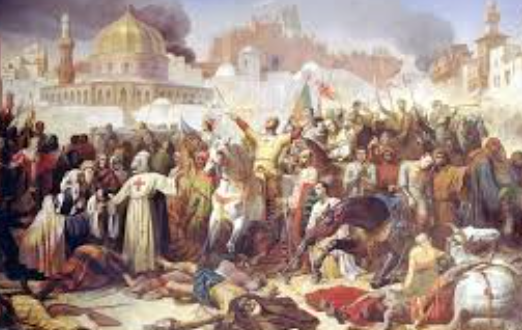
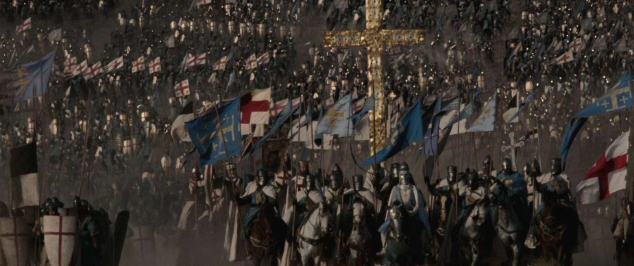
The church’s call for believers to participate in the Crusades was not just a religious war, but also a means for the Pope to expand his influence in Europe. The church incorporated the obligations of believers, feudal lords, and royal authority into a unified command system.
To sum it up in one sentence: The medieval church could influence national affairs, and even the king had to “bow” before the Pope.
Economic Power: The Church’s Pockets Are Bigger Than You Think
The church not only has spiritual authority, but also controls huge economic resources.
Land and Property
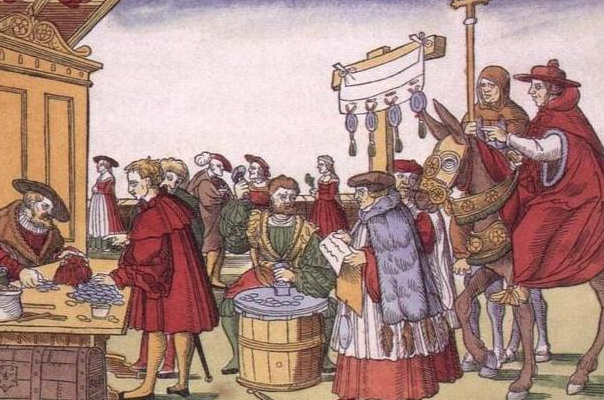
In Europe, the church owned about one-third of the land, and farmers were required to pay rent or tribute. This wealth not only supported church construction, but also could be used to finance wars and political activities.
Under the tithe system,
Believers must pay one-tenth of their income as tithe, which makes the church a veritable “tax collection agency” with financial management capabilities exceeding that of many feudal lords.
Monasteries
Were not only religious centers, but also economic units. They operated farmland, brewed wine, engaged in handicrafts, and even engaged in trade, providing a stable income for the church.
When you feel stressed, imagine the financial strength of the church in the Middle Ages. Its ability to control resources is not comparable to that of ordinary princes.
Social and cultural influences: Life cannot be separated from the Church
During the Middle Ages, the influence of the church permeated everyone’s daily life.
Schools
And universities were founded and administered by the church. They taught Latin, theology, and philosophy, closely integrating scholarship with faith. For example, the University of Paris and Oxford University were both founded under the guidance of the church.
Festivals and Liturgies
Christian festivals structured the daily routines of society: Easter, Christmas, All Saints’ Day… Markets, schools, even war plans revolved around the church calendar.
Legal and Moral
Norms Canon Law was more binding than the king’s law in many areas, and matters such as marriage, inheritance, and contracts were all subject to church rulings.
Gothic cathedrals, stained glass windows, murals, and manuscripts—all of these were products of church funding and promotion. Art served not only aesthetic purposes but also religious instruction .
Simply put, medieval people lived almost from birth to death within the church’s regulations and cultural atmosphere.
Challenges and Limitations of Church Power
Although the Church was powerful, it was not unshakable.
Struggles over royal authority
The conflict between England’s King Henry II and Thomas Becket, Archbishop of Canterbury, is a classic example of the power struggle between the monarchy and the Church.
Heresy and reform
The Albigensian heresy, the challenges posed by John Wycliffe’s ideas, and later the Reformation all show that the Church’s authority could be questioned.
Regional differences
The Church’s power varied across Europe. In countries like France and Italy, it was stronger, while in some northern European regions, kings could maintain relative independence.
Overall, although the Church was powerful, it had to compromise and interact with secular forces to maintain its position of authority.
Why can the church “hold the Bible in one hand and rule the world with the other”?
In summary, the medieval church was ubiquitous because it possessed the following three core advantages:
in spiritual authority
enables people to consciously follow church teachings, giving the church natural moral and social control power.
Political resources
The Pope can crown emperors, interfere in the succession to the throne, and even call for a crusade.
economic base
of land, tithes, and monastic economy gave it the financial capacity to compete with feudal monarchy.
This comprehensive strength enables the church to both “preach” and “govern the world.”
Summary : The Legend and Practical Significance of the Medieval Church
The medieval church was truly powerful, influencing not only European politics but also the economy, culture, education, and everyday life.
While its influence may be less pronounced today, a reflection on that period in history reveals that the true source of power lies in the combination of spiritual authority, economic resources, and political means . Entering a Gothic church and gazing up at its towering spires is not just about admiring the architecture but also about experiencing the legendary power of that era—the Bible in one hand, the world in the other .
https://www.wonarm.com/the-medieval-church-supreme-power-heresy-and-the-albigensian-crusade/