https://www.wonarm.com/the-plantagenet-dynasty-three-centuries-of-medieval-power/
If you’re interested in British history, the mention of the “Wars of the Roses” likely conjures up images of knights, castles, and bloody battles for the throne. But did you know that the prologue to this war actually began quietly, even before the founding of the Plantagenet dynasty ? Three hundred years of dynastic succession, power struggles, and political intrigue ultimately shaped the Wars of the Roses. Today, we’ll journey back to the Middle Ages and explore how the Plantagenet dynasty paved the way for one of the most famous struggles for the throne in British history.
The Rise of the Plantagenets: Beginning with Henry II
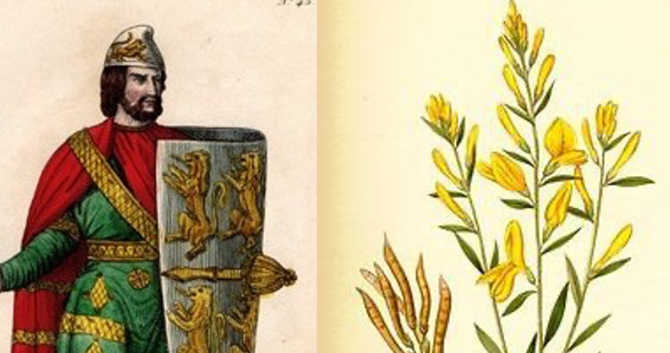
In 1154, Henry II inherited the throne of England, marking the official rise of the Plantagenet dynasty. This family was not native to England, but rather originated from Anjou, France, and possessed extensive overseas territories—Anjou, Aquitaine, and Normandy.
Political ambitions and marriage strategies
led him to marry the French heiress Eleanor of Aquitaine, thereby gaining control of a vast tract of southwestern France. This marriage strategy demonstrates the Plantagenet dynasty’s keen interest in power and territory.
legal and administrative reforms
promoted the development of the legal system, strengthened centralization, and consolidated royal power in England. This foundation made subsequent struggles for the throne more dramatic: the more centralized power, the more intense internal conflict.
To sum up in one sentence: The birth of the Plantagenet dynasty was the perfect combination of “foreign royal family + political ambition + French territory”, and it also laid the groundwork for the power struggle in the next three hundred years.
The issue of succession of royal power: The throne is not only passed on to the eldest son
The Plantagenet dynasty created hidden dangers in the succession process. Although primogeniture was common in medieval Europe, Henry II’s descendants were plagued by fratricide and family disputes.
Henry II’s four sons,
Richard I (the Lionheart), King John, Prince Henry, and Prince Geoffrey, were constantly vying for power. This power struggle intensified when Richard I was away on the Crusades and John was in charge of domestic affairs.
King John and the Magna Carta
King John’s despotism and financial exploitation triggered resistance from the nobles, which eventually led to the signing of the Magna Carta (1215). This was a sign that the power of the Plantagenet dynasty was restricted by law and the beginning of the division of royal power.
The uncertainty of the succession to the throne meant that the entire dynasty was destined to be full of internal conflicts from the very beginning.
Conflict within and outside the dynasty: the confrontation between France and England
The Plantagenet dynasty not only had to deal with internal strife but also faced the threat of France. With its territory spanning both England and France, the royal power had to constantly balance diplomacy and war.
The Hundred Years’ War was a prelude to
The long-standing tensions between England and France, with the Plantagenet dynasty constantly clashing with the French royal family over its territorial holdings in France. This laid the foundation for the war. The war further complicated the relationship between the royal family and the nobility, exacerbating internal instability.
The rise of aristocratic power.
Local nobles sought their own interests between the royal power and French pressure, sometimes supporting the heir to the throne and sometimes fighting for independence themselves.
To sum it up in one sentence: Under the double pressure of “domestic family struggles + foreign war pressure”, the instability of the throne of the Plantagenet dynasty became increasingly obvious.
Royal marriages and bloodlines: The heart of Game of Thrones
Plantagenet marriages were not just love stories, but tools of power, with each alliance potentially altering the course of succession.
Lancastrian
And Yorkist branches branched off from Henry III and Edward III. The claims of these two bloodlines to the throne laid the groundwork for the subsequent Wars of the Roses.
The political game of marriage:
Through marriage, the royal family not only forms alliances, but may also acquire territories in France, Scotland, and even Ireland, thereby continuously expanding the territory of power and making conflicts between royal family members more complicated.
It can be said that every marriage is a prelude to the battle for the throne, and every bloodline may become the fuse of war.
The Three Hundred Years of the Plantagenet Dynasty: The Inevitability of Conflict
From Henry II to Richard III, the Plantagenet dynasty experienced nearly three hundred years of succession, fraternal disputes, wars, and rivalries with the nobility . During these three hundred years, almost every generation of royal family members paved the way for the game of power, which eventually led to the War of the Roses:
Unstable throne : Frequent succession disputes make the struggle for the throne a normal thing.
The accumulation of internal and external pressures : the French War, the aristocratic rebellion, and the financial crisis made the royal family exhausted.
Bloodline Split : The conflict between the Lancaster and York branches almost doomed the outbreak of the War of the Roses.
To sum up in one sentence: The War of the Roses was not an accident, but the inevitable ending of the three hundred years of the Plantagenet dynasty.
Historical significance and enlightenment
The Plantagenet dynasty tells us several profound historical lessons:
The legitimacy of royal power is very fragile.
Even for a powerful dynasty, if the succession system is unstable, power may be challenged at any time.
Politics and marriage are inseparable.
The medieval royal family regarded marriage as an important tool to expand and consolidate power, and every marriage was part of the political game.
Conflict is a by-product of the accumulation of power.
Internal struggles, external wars, and aristocratic rebellions are all inevitable results of the highly concentrated royal power.
From this we can also understand that history is not a pile of accidental events, but the inevitable product of the interaction between politics, blood and power.

Summary : The prelude to the War of the Roses, the legend of the Plantagenet
The Plantagenet dynasty, which lasted for three hundred years, was one of the most complex and dramatic dynasties in medieval England. Its rise, succession crises, family feuds, and international conflicts gradually set the stage for the Wars of the Roses.
When we look back at this period of history, we see not only wars and conspiracies, but also the interweaving of power, blood, and humanity — each generation of royal family members is a participant in the script and a writer of history .
The story of the Plantagenet dynasty tells us that in the long river of history, the glory and decline of a dynasty were often written as early as three hundred years ago.
https://www.wonarm.com/the-plantagenet-dynasty-three-centuries-of-medieval-power/