https://www.wonarm.com/the-medieval-church-supreme-power-heresy-and-the-albigensian-crusade/
In medieval Europe, religion was not only a symbol of faith but also a core of political power. Between the 12th and 13th centuries, a heretical movement called the Albigensians (Cathars) emerged in southern France, engaging in profound conflict with Roman Catholicism over faith, power, and social order. The rise of the Albigensians and the church’s response not only shaped the religious order but also profoundly influenced the social structure and cultural landscape of southern France. Today, we will discuss the Albigensian heresy and the reshaping of the Latin Christian order.
Characteristics of the Albigensian Faith: Challenging the Traditional Church
The Albigensians, also known as Cathars , originated in the Languedoc region of southern France. Their beliefs differ significantly from those of Catholics:
In dualism
Believed that the world was dominated by two divine forces, good and evil, and that the material world was a product of evil, while the spiritual world was pure. This was completely opposed to the Catholic concept of the unity of matter and spirit.
Simple life and clerical ideals
The Albigensians emphasized poverty and abstinence, and rejected the church’s luxurious wealth and power from intervening in daily life.
The Albigensian concept of equality allowed women to hold clergy positions and advocated equality between male and female believers, which was extremely subversive in Europe at that time.
This belief system not only challenged Roman Catholicism ideologically, but also proposed a new concept of order in social structure, which made the church feel greatly threatened.
The Church’s Response: Heresy Hunting and the Restoration of Authority
Faced with the rapid expansion of the Albigensians, the Latin Church took tough measures:
Established the Inquisition
To investigate and interrogate heretics through the Inquisition, punish those who held heretical beliefs, and form a systematic suppression mechanism.
Albigensians
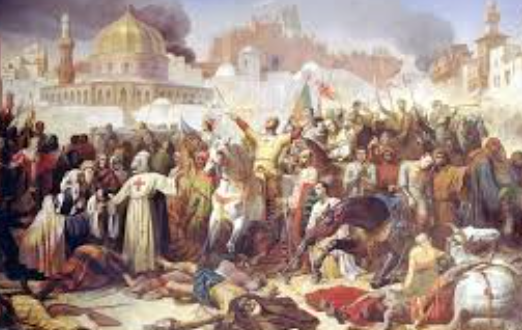
Officially known as the “Albigensian Crusade.” The military campaign not only targeted heretics but also weakened the power of local nobles who opposed church authority.
Reshaping of Church Authority
Through the Inquisition, the Crusades and religious propaganda, the Church re-established its ruling authority in southern France and completely suppressed heresy.
From a religious perspective, this was a reconstruction of the Latin Christian order; from a political perspective, it was also an important part of centralization and the expansion of church power.
Profound social and cultural impact
The Albigensian movement and its suppression not only changed the religious landscape, but also had a profound impact on southern French society:
The reorganization of the nobility and local forces
The Crusades and church intervention weakened the autonomy of local nobility, and many towns and territories were brought under the control of the church or forces loyal to the monarchy.
Public psychology and religious culture:
The Albigensians were forced to go underground, the religious atmosphere became more conservative and cautious, and the absolute authority of the church gradually consolidated among the people.
the suppression
The Albigensian ideals and literature were preserved to a certain extent, providing material for later generations of free thought and religious criticism.
It can be said that the emergence and demise of the Albigensians was both a tragedy of heresy and a sign of the reshaping of the Latin Christian order.
The Roots of Heresy: Social and Economic Factors
The rise of the Albigensians was not accidental; there was a complex social and economic background behind it:
Economically independent towns
In southern France had a prosperous economy, the urban middle class was self-sufficient, and they were dissatisfied with the constraints of traditional churches, making it a hotbed of heretical beliefs.
Dissatisfaction with Church Corruption
The Catholic Church owned a large amount of land and wealth at the time, and local people were disgusted with the church’s luxurious life and tax oppression.
Southern France is culturally diverse
And geographically close to Italy and Spain. It has frequent cultural exchanges and relatively open minds, providing fertile ground for heterodox ideas.
These factors allowed the Albigensian faith to spread rapidly in southern France and forced the church to take repressive measures.
The Remaking of the Latin Christian Order
Suppressing the Albigensian movement was an important practice for Latin Christianity to consolidate order in the Middle Ages:
Institutionalized religious authority
The Inquisition, canon law, and the Crusades formed a complete system of authority that gave the church direct influence in local affairs.
Thought Control and Doctrinal Unification
The Church, through propaganda and education, has deeply rooted orthodox doctrines in the hearts of the people, thus weakening the living space of heresy.
Combined politics and religion
With the help of royal power and military force to combine religious rule with political power, realizing the integration of centralization and local governance.
The defeat of the Albigensians marked the reshaping of the Latin Christian order. It not only defended the doctrine but also made the religious and political landscape of medieval Europe more stable.
Historical Revelation: The Game between Heresy and Power
The Albigensian movement tells us that religious conflict in the Middle Ages was not only a struggle of faith, but also a game of power and social order:
Conflict between freedom of belief and power:
When belief conflicts with the existing power system, the powerful often wins by suppressing it, but the seeds of thought are difficult to completely eliminate.
The construction of institutions and order
The church consolidated its authority through institutional means and provided a template for the religious and political order in medieval Europe.
The multi-dimensional value of history:
The Albigensian movement is not only an event in religious history, but also involves historical understanding in multiple dimensions including social, economic and cultural.
From the Albigensians to the reshaping of the Latin Christian order, history demonstrates the complex and profound interaction between faith, power, and social structure.
Summary : The Tragedy of Heresy and the Rebirth of Order
The story of the Albigensians is a microcosm of medieval religion and society. The tragedy of heresy reminds us that challenging the established order often comes at a high price; the rebirth of order reflects the deep intertwining of power, institutions, and faith.
Looking back at the Albigensians today, we are not only looking at a period of religious history, but also understanding the eternal game between thought and power, freedom and order in history.
https://www.wonarm.com/the-medieval-church-supreme-power-heresy-and-the-albigensian-crusade/